Almost Christmas. Thank goodness because my poinsettias started blooming in early October! I didn’t plan it that way. My new bloom closet just worked super well. I think the purple LEDs trigger blooms quickly.
So, yesterday I was visiting the town of Ouray, CO and came across this unusual poinsettia for my collection. The shopkeeper called it a pin cushion poinsettia, but my Google search said valentine poinsettia. Either way, it looks like roses from a short distance.

I now have 7 poinsettias, all in bloom. Two survived for 2 years, three were additions last year, and this year, I added 2 more. They get big, so this many won’t fit in the bloom closet at once. I’ll have to stagger the bloom force dates or set up a different space. Poinsettias get big – a benefit in blooming splendor but not space in the house.
I want to show you my other six blooms. I should preface this by telling you that traditional plain red blooms don’t speak to my creativity and curiosity, so I’m on the lookout for unusual colors and shapes.
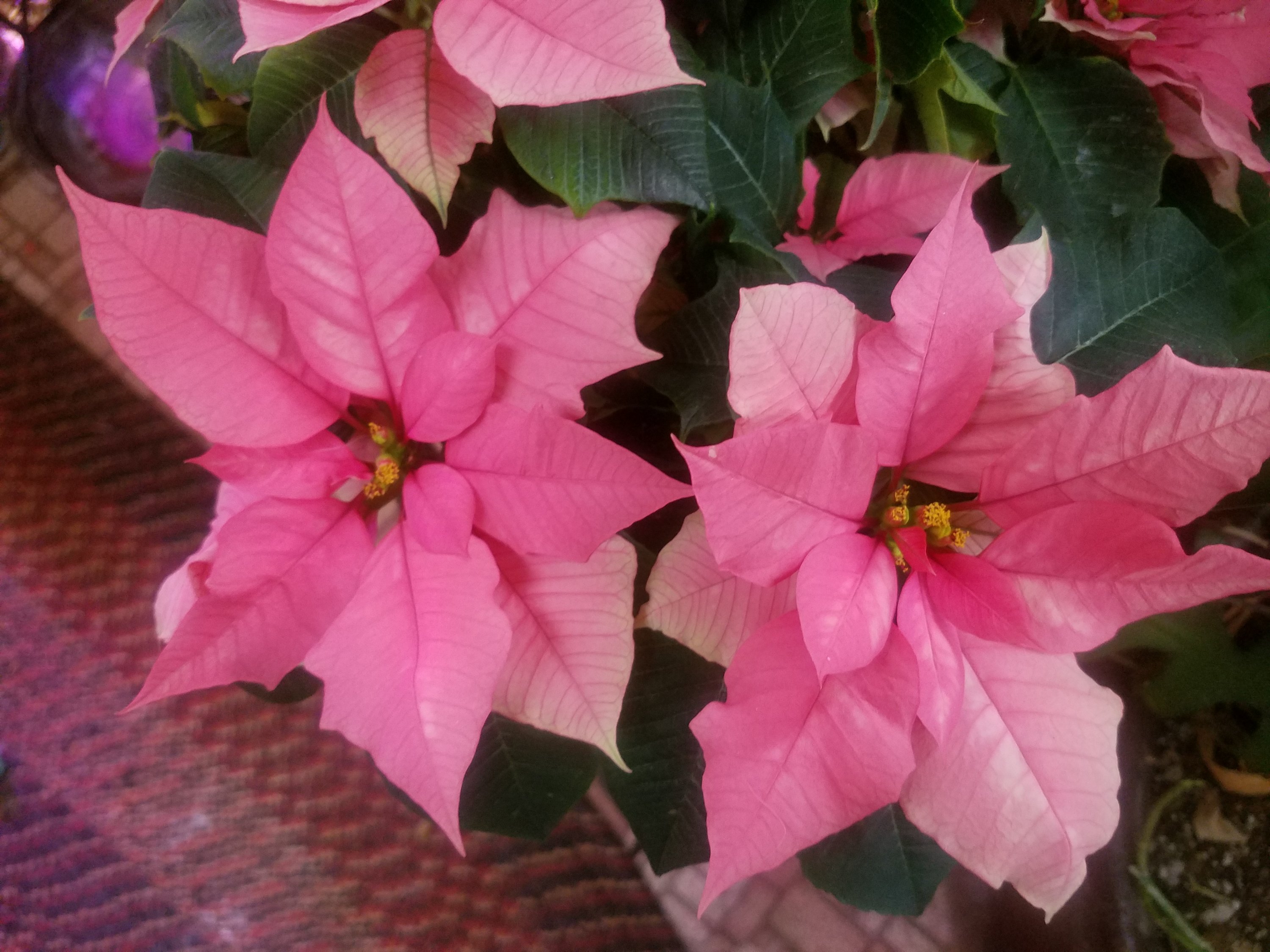
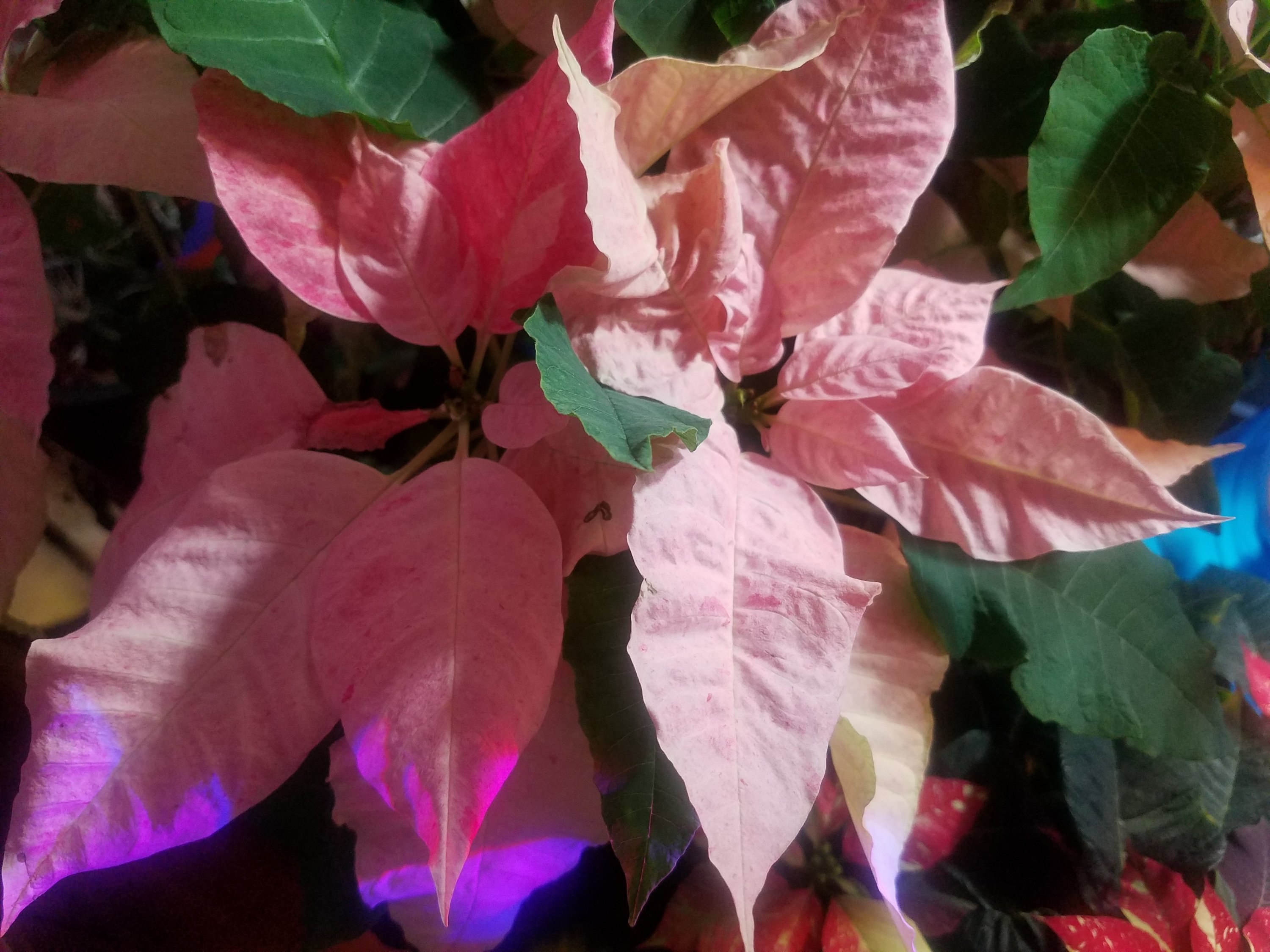
My oldest ones are survivors from 2 years ago when I went on a poinsettia shopping spree. I had 14. Two survived. I added boosted lights all around my windows last winter and wow, what a difference. These two are different shapes and sizes. Both pink. I don’t know names (like I do with daylilies). Here they are:
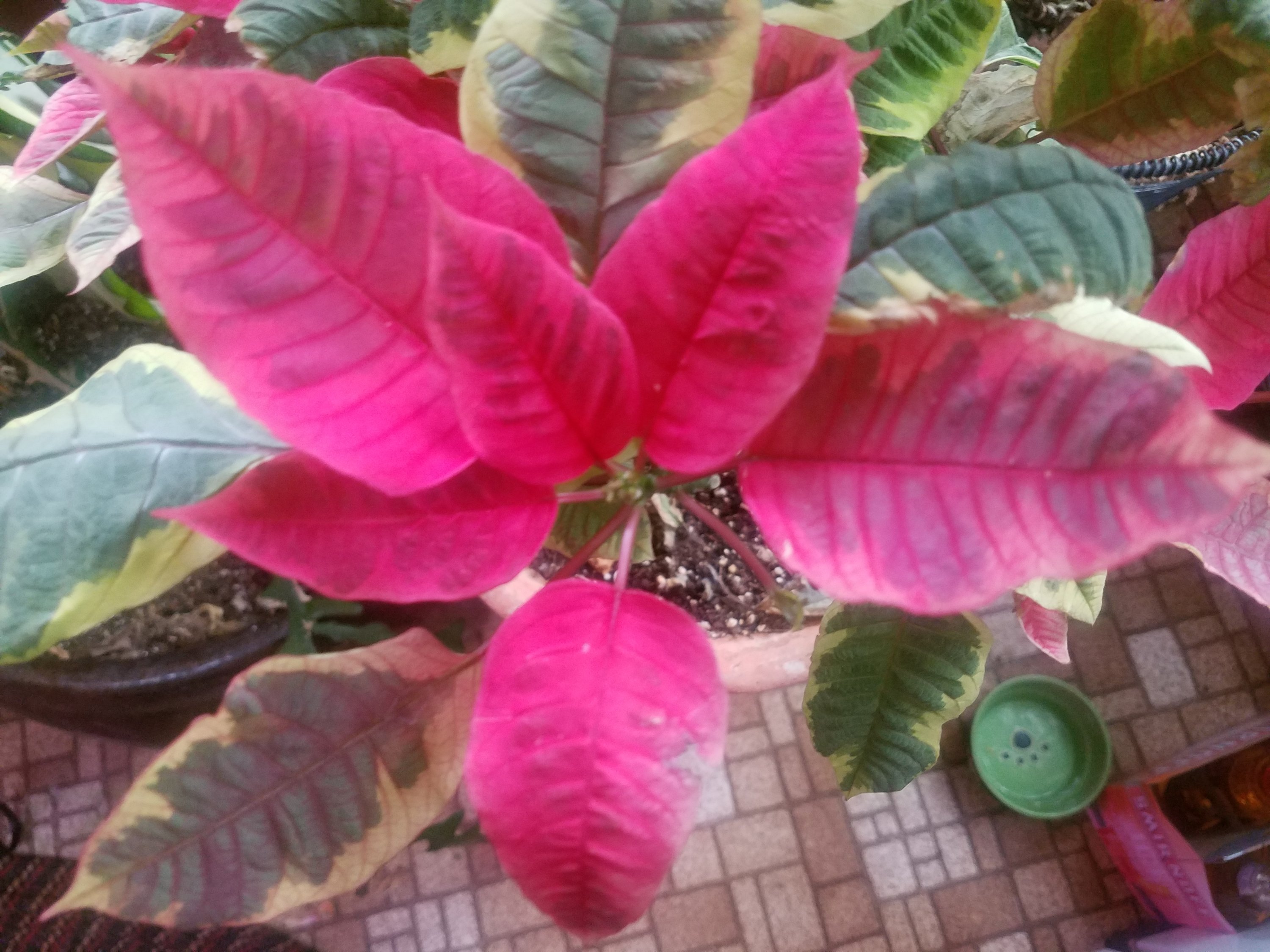
Last year’s additions included one with variegated leaves and red blooms (I’m not happy with the cat for nibbling off a few leaves):
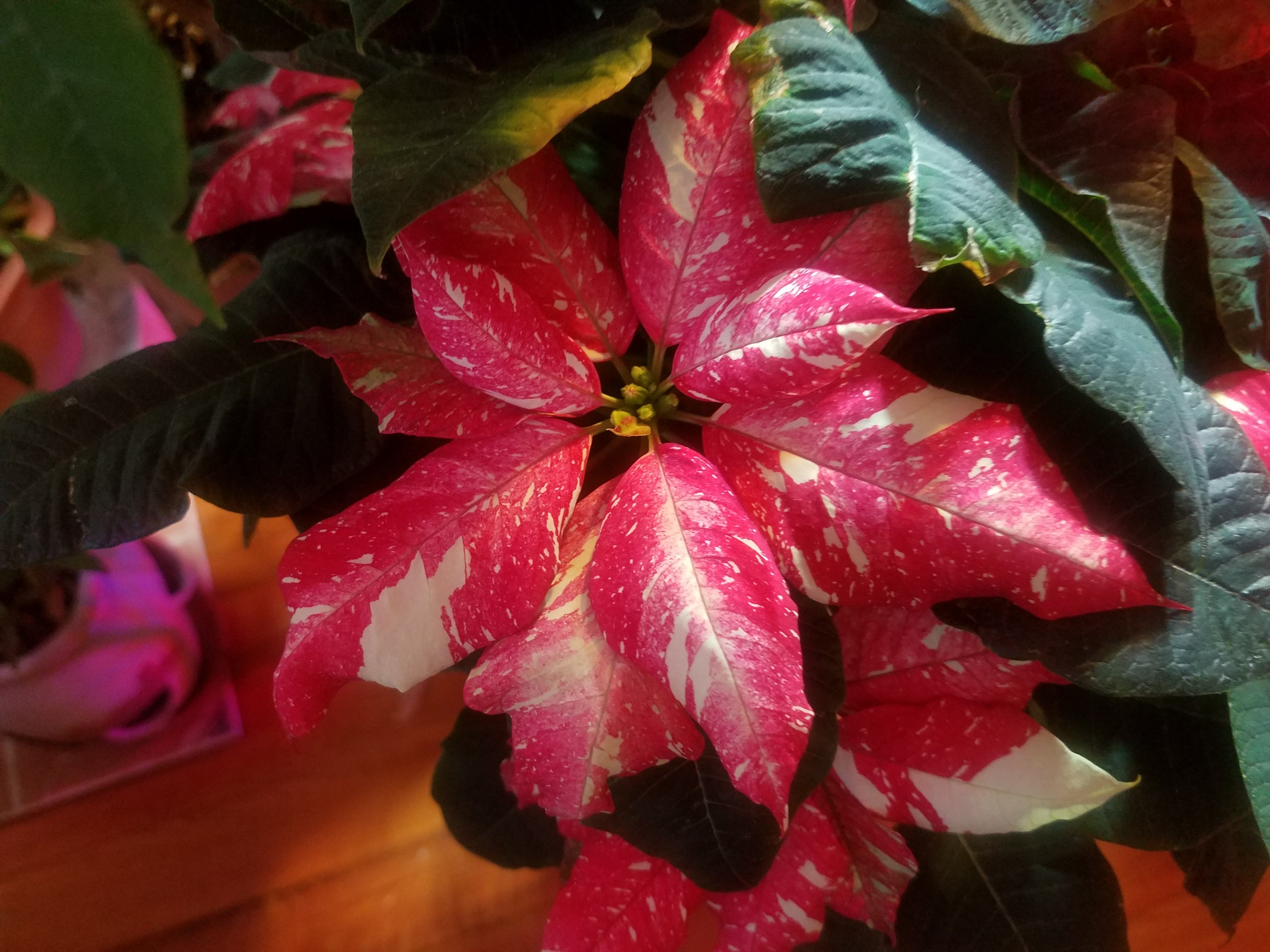
And, one with green leaves and variegated blooms (this was my only Christmas gift last year):
I added this pink/white one last Thanksgiving:
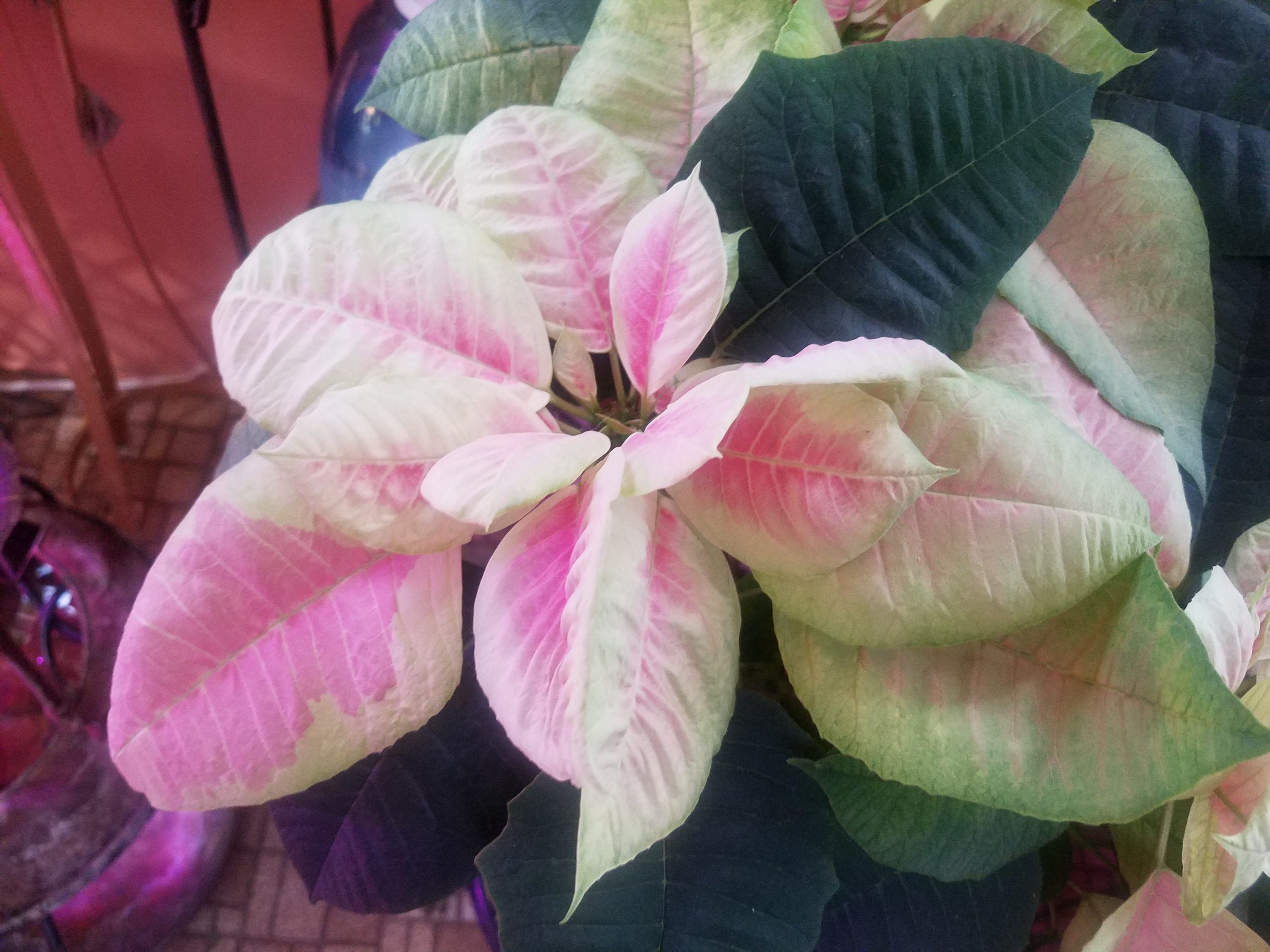
And, this year, I added another orange one. My first rebloom success was an orange one, but it didn’t survive the second winter:
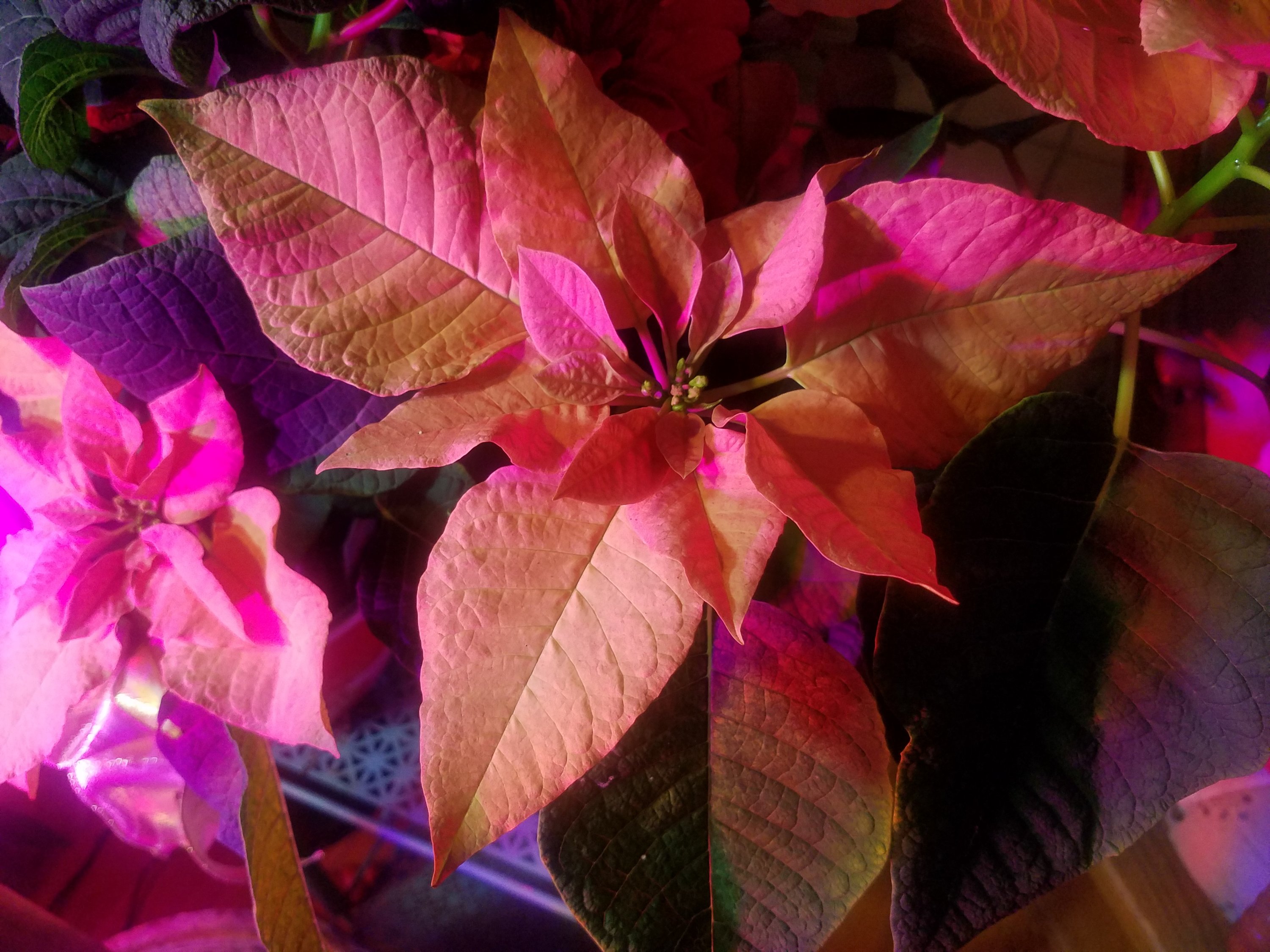
So – What’s my trick with rebloom? Well, let’s start with bloom season and go through those steps.
The bloom season starts late fall (unless you put them under timed lights earlier) and runs through early spring. I like reblooming mine because I like watching the blooms get bigger every week until they are nursery sized.
The big, colorful blooms last several months. However, usually by February they start dropping bottom leaves. When they start to look straggly (or when I’m tired of the Christmas look) they go back into the bloom/grow light closet. This seems to give them the needed energy to make it through to late spring. I’ve had them begin the spring growth cycle under the lights. That’s good, because prior to the light, warm area, I lost 90% of my plants late winter/early spring.
I live in the high desert of the Colorado Plateau. Our winters are cold and my windows get cold at night. This is great for getting orchids to rebloom but deadly for poinsettias. So, mine are all several feet from the windows with boosted light of some sort. I repot if needed in April.
Then comes May. Mid-May sometime, my poinsettias move outside. I have one on my drip system and the rest outside where the sprinklers hit them every day. They often have a colored brack (bloom) or two left, but not many bottom leaves. I slowly cut back the branches to 6 inches. Once I see new leaves forming, I cut more.
It’s amazing how resilient these plants are – mine were in a fairly sunny spot and we had single digit humidity with windstorms. They were just glad for the warmth, I think. Our temps still drop under 50 some, but at this point, I don’t get wilting like I do on short, cold winter days.
Once the new leaves start coming quickly (mid-June), I begin pruning and shaping for the next year. They are in growth phase, so the more you clip the more they branch. More branches mean more blooms. I usually get busy with my daylilies at this point, but I do try to remember to fertilize every couple weeks.
I brought mine in last August this year and put them in my bloom closet. The closet has 2 overhead purple LED fixtures. I think I paid less than $50 a piece for these on Amazon. Those are surrounded by light fixtures with a mix of white LED plant lights and plain CFUs (curly lightbulbs). I set my timer to come on at 8 AM and off at 6 PM. I have blackout curtains that stay closed all the time until all the plants start to bloom.
I like this set-it-and-forget-it arrangement a lot – it’s a keeper. But I set an alarm in my phone to remember to water twice a week. I forgot once this year and lost some bottom leaves. The big thing is total darkness more than 12 hours a day. I add a second black out curtain and this is a basement room, so all other lights are out at the same time.
And, the bloom cycle begins, again.
I’m nervous about next summer, as we are still in exceptional drought. I don’t know about water restrictions but I do know these guys need daily water when it’s hot and dry.
As for the daylilies, I’m worried about drought damage. I had health issues late summer/early fall, so didn’t keep up with my watering schedule. I need to start winter watering today so the plants go into spring at their best. I’m wondering if I’ll loose some. My evergreens come into the porch today (not heated), too. I didn’t mean to drop the blog so quickly, but health took priority and I had no blooms after August this year.
I’ll be back with my amaryllis and orchid blooms off and on this winter.